There are moments in history when change does not arrive with thunder, but with something quieter, something that grows.
A petal. A stem. A field, suddenly impossible to ignore. Flowers have long carried the language of movement, not just as decoration, but as signals. Codes. Soft revolutions.
It begins, perhaps, with the rose.
In 1889, as workers gathered under the banner of the Second International, the red rose emerged as a symbol of socialist struggle. Not because it was fragile, but because it wasn’t. The rose held contradiction in its form: beauty and thorn, tenderness and defense. It became the emblem of those who believed that dignity could be fought for—and that even the softest things could bleed.
Then comes a quieter bloom: the daisy.
In 1967, during the height of the Vietnam War, young protesters began placing daisies into the barrels of soldiers’ guns. It was not strategy. It was gesture. The flower became a refusal—a way to say that innocence, though often dismissed, could still interrupt violence. Change, here, was not loud. It was disarming.
Not all flowers resist. Some endure.
In 1912, the cherry blossom—sakura—was gifted by Japan to the United States, planted in Washington, D.C. as a symbol of diplomacy. But beyond politics, sakura carries a deeper message: that change is inevitable. Blossoms fall at their peak, not in decay. They remind us that transformation is not always decline—it can be timing, rhythm, the natural end of one moment making space for another.
Some flowers rise from places we would rather not look.
The lotus, known for centuries across Asia, took on renewed symbolic power in the 20th century during movements of decolonization—especially around the 1947 independence of India. Rooted in mud yet blooming untouched, the lotus became a metaphor for nations and identities reclaiming themselves. Change, in this form, is not clean. It is earned.
And then, more recently, a field turned into a statement.
In 1996, after Ukraine gave up its nuclear arsenal, sunflowers were planted at former missile bases. Decades later, in 2022, those same flowers re-emerged as symbols of resistance. The sunflower does something simple: it turns toward the sun. But in times of conflict, that act becomes meaning. To turn toward light, even when surrounded by darkness, is itself a form of defiance.
And then, there is the poppy.
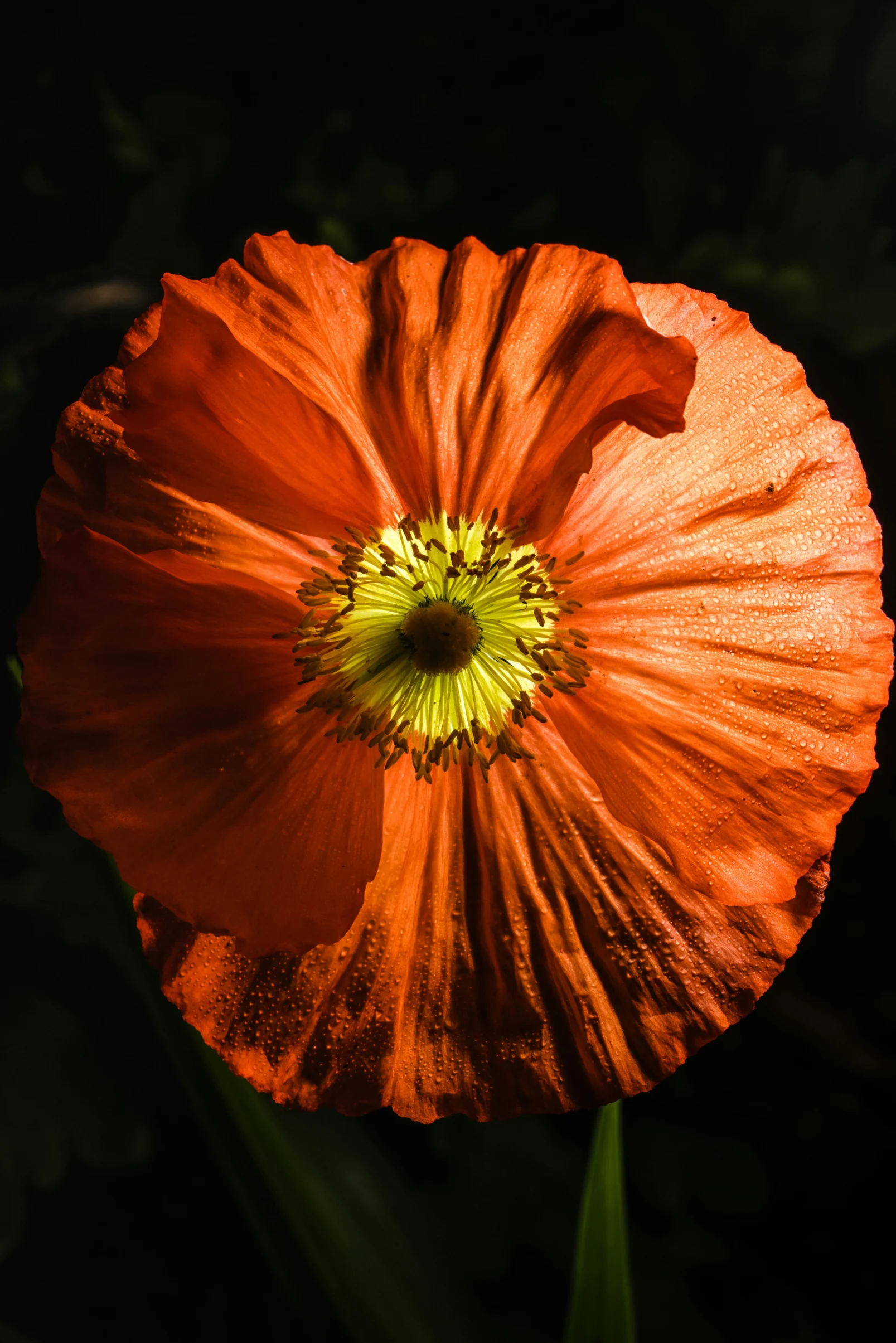
It does not bloom at the beginning of change, but after. In 1915, during the devastation of World War I, a poem—In Flanders Fields—noticed what others might have missed: red poppies growing across scarred земли. By 1921, they were worn in remembrance, carried by the Royal British Legion. The poppy became a symbol not of movement, but of its cost. A quiet warning, rooted in soil that had already paid the price.
And somewhere in between, scattered across fields and sidewalks, are the wildflowers.
They have no single date. No origin story that can be traced. They grow without permission, outside systems, beyond design. Wildflowers do not organize—but they spread. They do not demand attention—but they take space. In many ways, they are the purest form of movement: decentralized, uncontrollable, alive. Revolutions do not always begin with fire. Sometimes, they begin with something that grows slowly, quietly, insistently. Something that refuses to stop.
A rose in a fist.
A daisy in a rifle.
A blossom falling at its peak.
A lotus rising from mud.
A sunflower facing the sun.
Change, it turns out, has roots.