Before we arrived with our questions, the Earth had already answered everything.
Not in words, of course. There were no alphabets in the wind, no grammar in the tides, but in systems. Quiet, continuous systems. Forests did not debate sustainability, they practiced it. Oceans did not draft agreements, they circulated life through invisible currents. Mountains did not argue for resilience, they simply endured.
A fallen tree in an ancient forest was never “waste.” It became a bridge, a home, a slow feast for fungi threading beneath the soil. Death was not an ending but a redistribution. Every problem dissolved into transformation. Nothing accumulated beyond use. Nothing extracted without return.
The atmosphere itself was a long negotiation, conducted over billions of years. Early Earth was hostile, thick with gases that would suffocate us today. But life, tiny, patient, persistent, began to alter it. Cyanobacteria exhaled oxygen as a byproduct, not as a plan, and yet it reshaped the entire planet. Catastrophe and creation arrived together, indistinguishable. The Earth did not fear change, it metabolized it.
Rivers solved direction without maps. They are not only followed gravity, but also resistance, carving, bending, adapting. When blocked, they did not stop, they found another way. In their movement is a kind of intelligence we rarely recognize: not control, but response.
Coral reefs built cities without architects. Termites engineered cooling systems without blueprints. Mycelial networks distributed nutrients across forests with a fairness that resembles care. These were not solutions imposed from above, but patterns emerging from within, self-organizing, self-correcting, endlessly iterative.
Before humans, there was no concept of a “problem” as something separate from the world. There were only conditions, and responses to those conditions. Imbalance triggered adjustment. Scarcity triggered adaptation. Excess triggered decay. The system held itself together not through perfection, but through constant feedback.
And then we arrived, carrying a different logic. We named things. We isolated them. We called something a problem when it resisted our desire. We began to solve by separating, extracting, optimizing. Often forgetting the wider system in which those solutions would ripple.
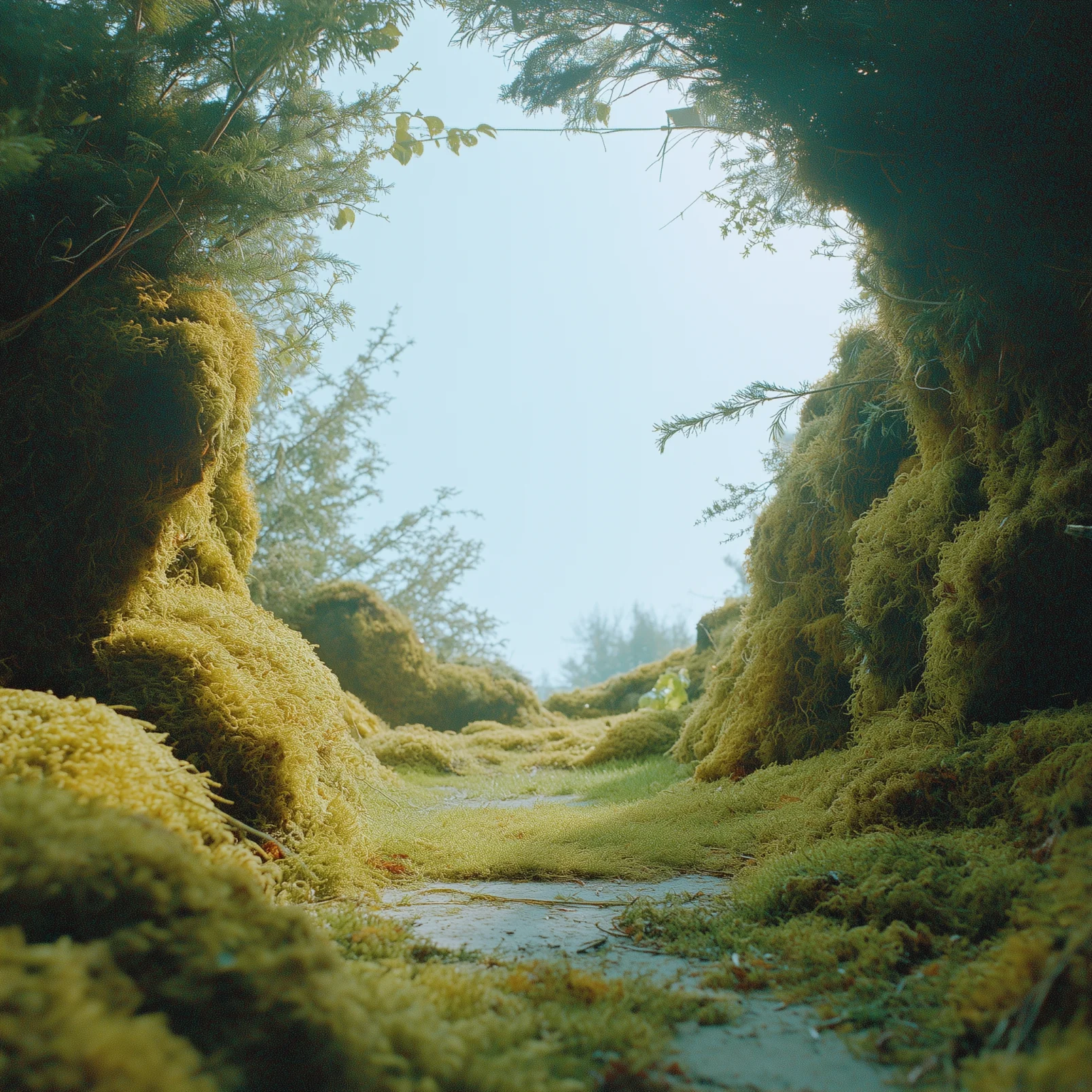
Yet even now, beneath our cities and beyond our abstractions, the older intelligence persists. Soil still rebuilds itself grain by grain. Ice still records time in layers. The wind still redraws the landscape without asking permission.
The Earth never needed to “solve” anything in the way we understand it. It simply continued, adjusting, cycling, becoming. What we call solutions were, and still are, relationships. Perhaps the deeper question is not how the Earth solved anything before us, but whether we have ever truly understood the elegance of its answers.